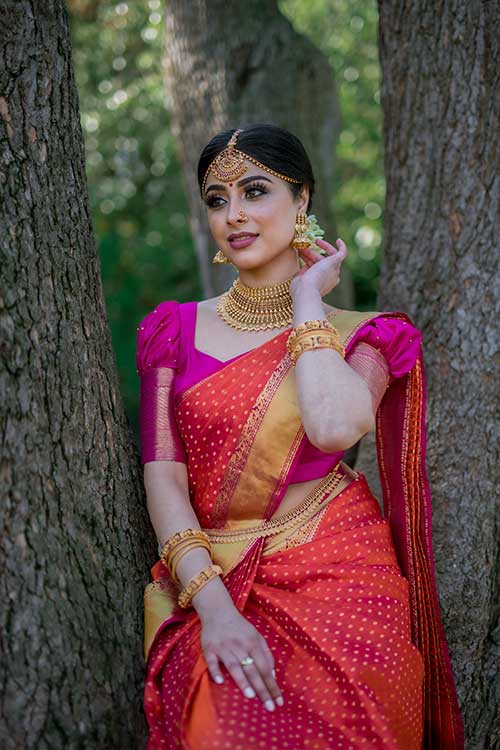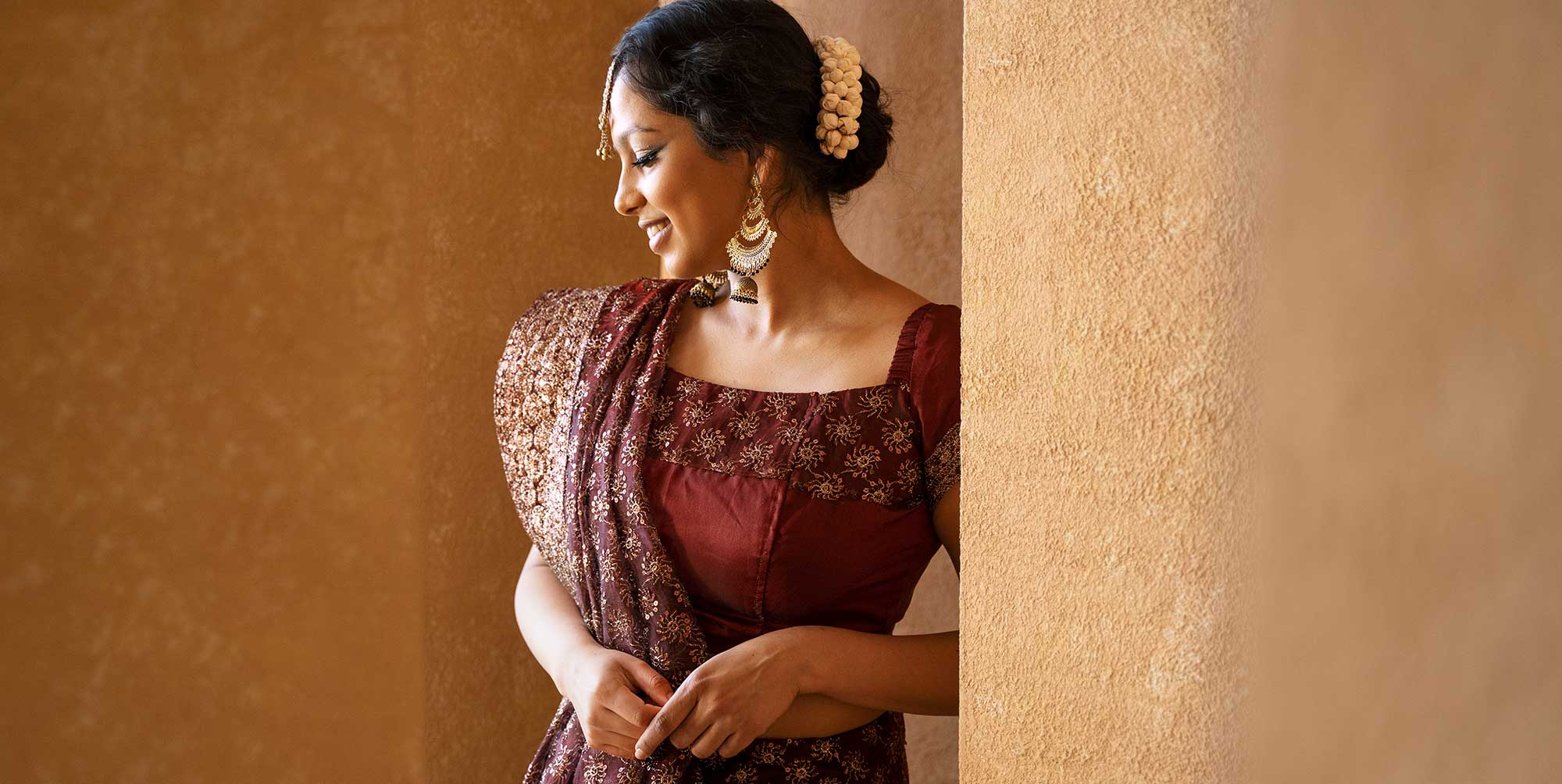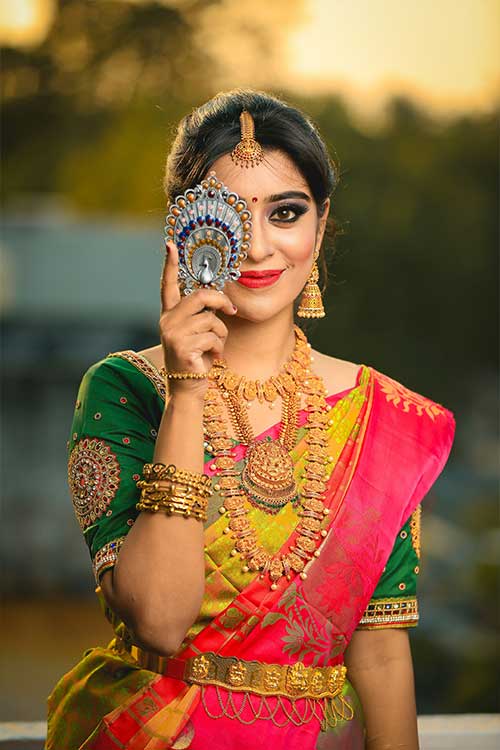
Long before it became bridal jewellery, temple jewellery was crafted for deities — offered to temples in South India as an act of devotion, and later replicated as ornaments for classical dancers performing in temple courtyards. That origin is why the motifs feel so distinctly sculptural.
“Temple jewellery was never meant to be quiet — it was designed to be seen from across a courtyard.”
Look closely at a temple jewellery piece and you’ll usually find recurring symbols: the goddess Lakshmi, peacocks, lotus flowers and the deity Nataraja. These aren’t decorative choices made at random — each motif carries meaning passed down through generations of goldsmiths.
Traditionally crafted in gold with rubies, emeralds and pearls, temple jewellery has found a wider audience today thanks to more accessible gold-plated versions that keep the intricate detailing without the traditional price point.
A temple jewellery choker or long haaram pairs beautifully with silk sarees in deep, rich colours — think maroon, mustard and forest green — where the gold detailing has room to stand out rather than compete with the fabric.